1943 Steel Penny vs 1943 Copper Penny: The Magnet Test That Tells Them Apart
1943 Steel Penny vs 1943 Copper Penny: The Magnet Test That Tells Them Apart
What if one penny in your change jar was made of the wrong metal — and that one mistake made it one of the most famous coins in America?
That is exactly the story of the 1943 cent. In 1943, pennies were supposed to be grey steel. A tiny number were struck in copper-coloured bronze by accident. Telling the two apart takes about three seconds and one household object: a magnet.
This guide shows you how to run the test properly, what a normal 1943 penny is worth, and how to spot the fakes that fool beginners every single week.
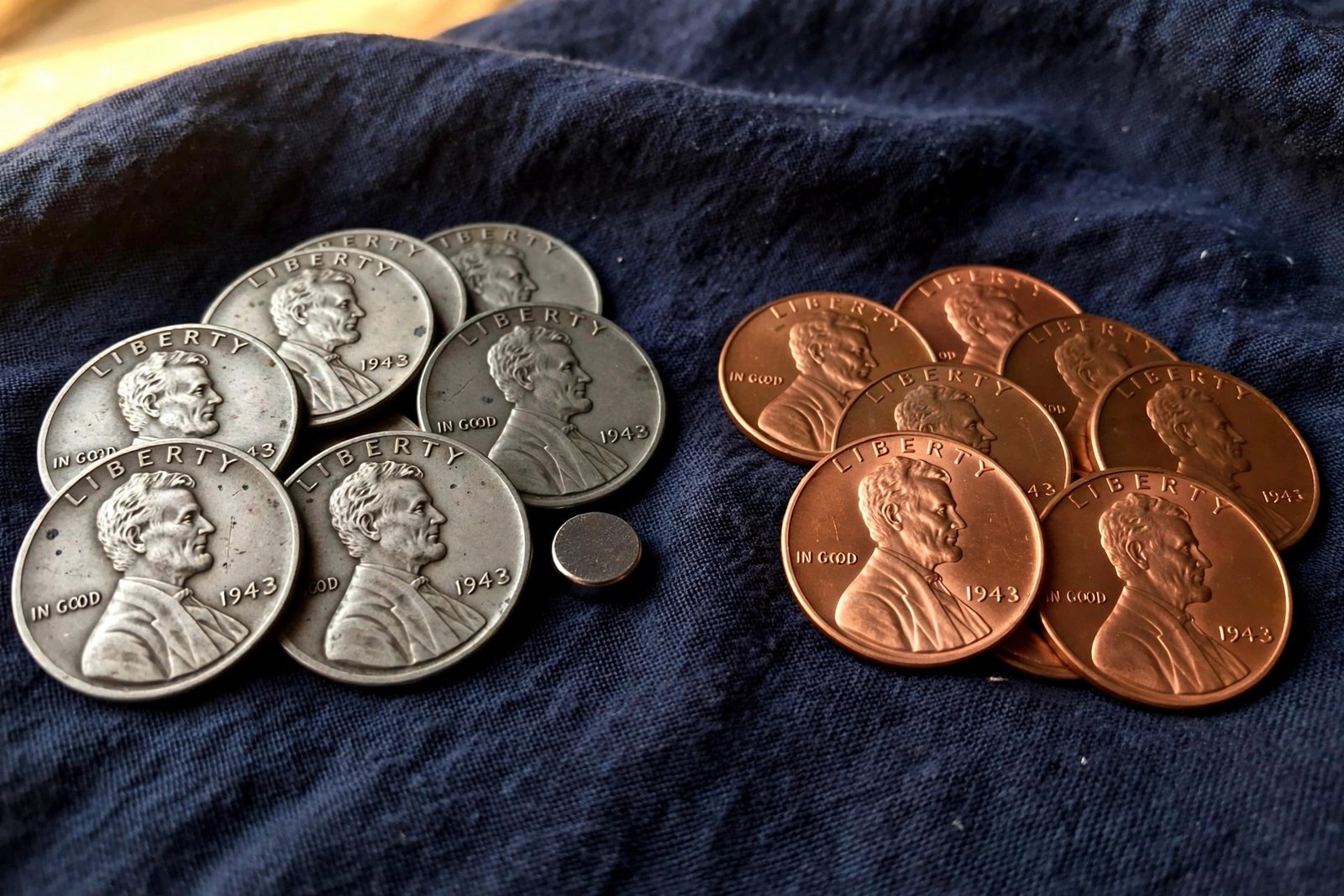
Quick answer: A normal 1943 penny is zinc-coated steel, grey, weighs 2.7 grams, and sticks to a magnet. It is common and worth about $0.45–$10 by condition. A genuine 1943 struck in bronze is copper-coloured, weighs 3.11 grams, and does NOT stick to a magnet — and it is one of the rarest US coins, with only a few dozen known.
Why did the Mint make a steel penny at all?
In 1943 the United States was deep in World War II. Copper was needed for shell casings and wiring, so the Mint changed the cent for one year only.
Instead of the normal bronze mix (95% copper, 3.11 grams) used for other wheat cents, 1943 cents were made from steel coated with zinc to slow down rust. They are light grey, almost silver in colour, and at 2.7 grams they feel noticeably lighter than a normal penny.
They were made in huge numbers — over one billion across the Philadelphia, Denver, and San Francisco mints combined. That is why a genuine steel cent, while a great piece of history, is not rare.
In 1944 the Mint went back to bronze, using recycled shell cases for 1944–1946 coins. Which leads to the two great mistakes.
The two errors, explained simply
The 1943 bronze (copper) cent. A few bronze blanks left over from 1942 were still in the equipment when 1943 production started. They were fed into the presses and struck with 1943 dies. Only a few dozen are known across all three mints combined, and every genuine example is a major rarity.
The 1944 steel cent. The reverse mistake happened the next year. A few leftover steel blanks were struck with 1944 dies after the Mint switched back to bronze. About three dozen are known. These look like a grey, magnetic penny dated 1944 — a date when pennies should be copper-coloured.
Both errors are valuable because they should not exist. Neither can be confirmed by looks alone. Both need the tests below, and then professional certification.
The magnet test — step by step
- Use any ordinary fridge magnet.
- Hold the coin flat, or hold the magnet just above the coin on a table.
- Watch what happens:
- The coin jumps to the magnet or clings to it: it is steel. If it is dated 1943, it is a normal steel cent. If it is dated 1944 and truly steel, it deserves expert attention.
- Nothing happens — no pull at all: the coin is not steel. A copper-coloured 1943 that ignores a magnet has passed test one.
Why it works: steel contains iron, which is magnetic. Copper and bronze are not magnetic at all. There is no middle result — the coin either sticks clearly, or it does not react.
Three more checks before you get excited
A magnet result is a starting point, not a verdict. Add these:
Weight. A steel cent weighs 2.7 grams. A bronze cent weighs 3.11 grams. A cheap coin scale (about the price of a pizza) settles it. A copper-plated steel fake will still weigh 2.7 grams.
Colour and edge. A steel cent is grey all over, including the edge. A bronze cent is copper-brown all over, including the edge. A plated steel cent can look copper-coloured on the faces but often shows grey breaking through at the rim or on high points.
The date itself. Fakers also alter dates — most famously by cutting down a 1948 to look like a 1943. On a genuine 1943, the 3 has a distinctive long, curved tail. Compare your coin’s 3 with the 3 on a common 1943 steel cent: they should match exactly.
Value table
| Coin | Circulated | Approx. value in higher grades |
|---|---|---|
| 1943 steel cent (genuine, normal) | $0.45–$2 | Up to about $10 in top uncirculated condition |
| 1943 bronze cent (genuine, certified) | Tens of thousands and up | Well into six figures depending on mint and grade |
| 1944 steel cent (genuine, certified) | Tens of thousands and up | Higher for the finest certified examples |
| Copper-plated 1943 steel cent (fake) | A novelty only | No collector premium |
What to look for — checklist
- Grey colour and 1943 date? Expect it to stick to a magnet and weigh 2.7g
- Copper colour and 1943 date? Test it — no magnetic pull and 3.11g is what you want to see
- Any date after 1943 that is grey and magnetic? Check carefully, especially 1944
- Look at the edge and high points for grey metal showing through a copper colour (plating)
- Compare the shape of the “3” with a known genuine 1943 steel cent
Common mistakes and fakes
Copper-plated steel cents are everywhere. Plating a common 45-cent steel cent in copper takes minutes, and plated coins are sold at flea markets, online, and in “unsearched” rolls. The magnet exposes them instantly: plated steel still sticks.
Trusting colour alone. Cleaning, toning, and plating can all change a coin’s colour. Weight and magnetism cannot be faked as easily, which is why we test metal, not looks.
Assuming every non-magnetic 1943 is real. A genuine result on both tests still leaves altered dates and outright counterfeit copies. With only a few dozen real bronze 1943 cents known, any candidate must be certified before it has real market value.
Cleaning a steel cent to make it shine. Steel cents rust and spot easily, and many have been “reprocessed” — stripped and re-plated to look new. Original, dull-but-honest steel cents are worth more to collectors than shiny reprocessed ones.
What to do if you find one
- Run the magnet test and weigh the coin. Write down both results.
- Do not clean, polish, or scratch-test the coin. Never file an edge to “check the metal” — that destroys value.
- Handle it by the edges and store it in a coin flip, away from moisture — steel rusts.
- Photograph both sides clearly, next to the scale reading if you have one.
- If it is copper-coloured, non-magnetic, weighs 3.11g, and dated 1943 (or grey, magnetic, and dated 1944), contact PCGS or NGC about certification before selling or announcing anything. Dealers will only pay serious money for a certified coin.
FAQ
Is a 1943 steel penny rare?
No. Over one billion were minted across the three mints. A genuine steel cent is worth roughly $0.45–$10 depending on condition. It is the 1943 struck in bronze that is rare — only a few dozen are known.
How can I tell a real 1943 copper penny from a fake?
Start with the magnet (a real bronze cent will not stick) and the weight (3.11 grams, not 2.7). Plated fakes fail one or both tests. After that, only PCGS or NGC certification can confirm it, because altered dates and copies also exist.
My 1943 penny sticks to a magnet but looks copper-coloured. What is it?
Almost certainly a normal steel cent that has been copper-plated after leaving the Mint. Steel is magnetic no matter what colour is put on its surface, so the magnet is telling you the truth.
What is a 1944 steel penny worth?
A genuine, certified 1944 steel cent is a major rarity — about three dozen are known — and examples sell for tens of thousands of dollars and up, depending on grade. Most grey 1944-dated coins offered to beginners are fakes or altered, so certification comes first.
The 1943 errors are just the start of the valuable penny story — you will find both of them, and the rest of the coins worth hunting for, in our guide to the most valuable pennies.
Values are estimates based on grade, authenticity and current market demand at the time of writing (October 2026). A cleaned, damaged or counterfeit coin is worth far less. Get valuable coins certified by PCGS or NGC.