Never Clean a Coin: And 5 Other Mistakes That Destroy Value
Never Clean a Coin: And 5 Other Mistakes That Destroy Value
It usually starts with the best intentions. Someone finds a dark, crusty old penny, thinks “this would look so much better shiny,” and reaches for a cloth, a cleaner, or something from the kitchen cupboard. Ten minutes later the coin is bright — and worth a fraction of what it was worth dirty.
Cleaning is the single most common way beginners destroy the value of a good coin. This guide explains why, what counts as cleaning (the list is longer than you think), how to care for coins safely instead, and five other mistakes that quietly do the same damage.
Quick answer
Never clean a coin. Any cleaning — polishing, dipping, baking soda, vinegar, erasers, wire brushes — damages the surface, leaves hairlines, strips natural toning, and cannot be undone. Certified grading services label such coins as “cleaned — details” instead of giving them a normal grade, which cuts value drastically, often by half or more. Handle coins by the edges, store them dry in non-PVC flips, capsules, or albums made for coins, and leave dirt exactly where it is.
Why collectors hate a cleaned coin
A coin’s surface is a record of its life. Original surfaces have a particular look — mint luster on uncirculated coins, honest colour and toning on circulated ones. Cleaning tears that record up.
Polishing and buffing leave thousands of tiny parallel scratches called hairlines that catch the light unnaturally. Chemical dips dissolve a thin layer of metal along with the toning, leaving a coin that looks flat, pale, and lifeless — dealers call it “burned.” Abrasives like baking soda, erasers, and brushes gouge the fields and round off design details that took a century to survive.
Here is the part that surprises people: none of this can be reversed, toned back, or polished out. And it is easy to detect. Experienced collectors spot a cleaned coin in seconds, and PCGS and NGC will not assign it a standard grade. It gets a details grade — an honest description with the word “cleaned” attached — and the market prices it accordingly.
| Method people try | What it actually does |
|---|---|
| Polishing cloth or metal polish | Hairlines, unnatural shine, worn high points |
| Coin dip | Strips toning and metal, leaves surfaces dull and flat |
| Vinegar, lemon, or cola soak | Etches the surface, uneven colour, pitting |
| Baking soda paste | Abrasive scratches across the whole coin |
| Pencil eraser | Bright parallel lines, especially visible on copper |
| Wire brush or steel wool | Deep scratches, design detail destroyed |
If a method promises a coin will look “like new,” that is precisely the problem. Old coins are not supposed to look new.
Safe care: what to do instead
You do not need to leave a good coin filthy, and you do need to store it properly. The safe rules are simple and cheap.
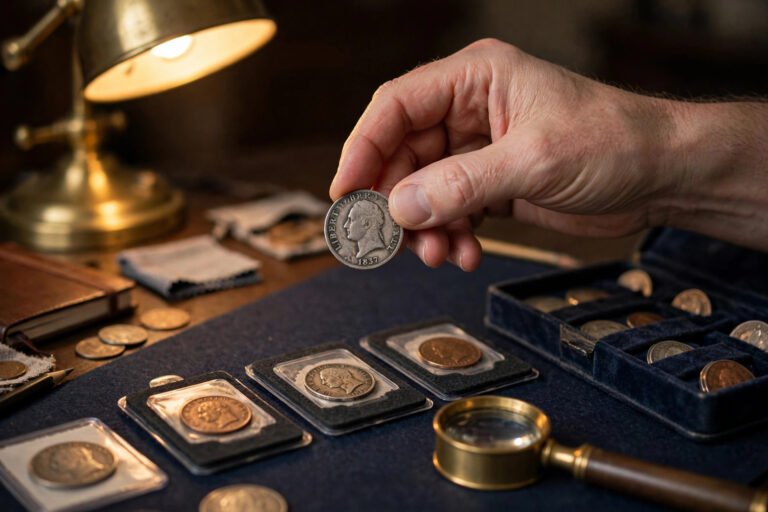
- Hold every coin by its edges, between thumb and forefinger. Never touch the faces — skin oils can print permanently onto copper and silver.
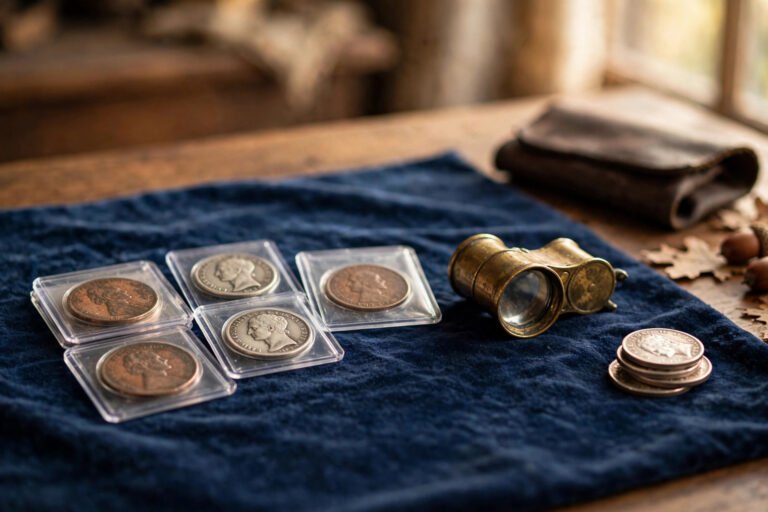
- Store in non-PVC flips or Mylar holders, capsules, or albums made for coins. Soft PVC flips are the hidden enemy: over time, PVC breaks down and leaves a green, sticky residue on coins. If a flip feels soft, floppy, and smells strongly of plastic, do not use it.
- Keep coins dry and somewhere stable. A drawer or a safe indoors beats a damp basement, a garage, or a bathroom cabinet. Moisture spots and corrodes coins slowly and permanently.
- Never tape a coin to cardboard or paper. Adhesive damages surfaces and leaves residue that counts as damage.
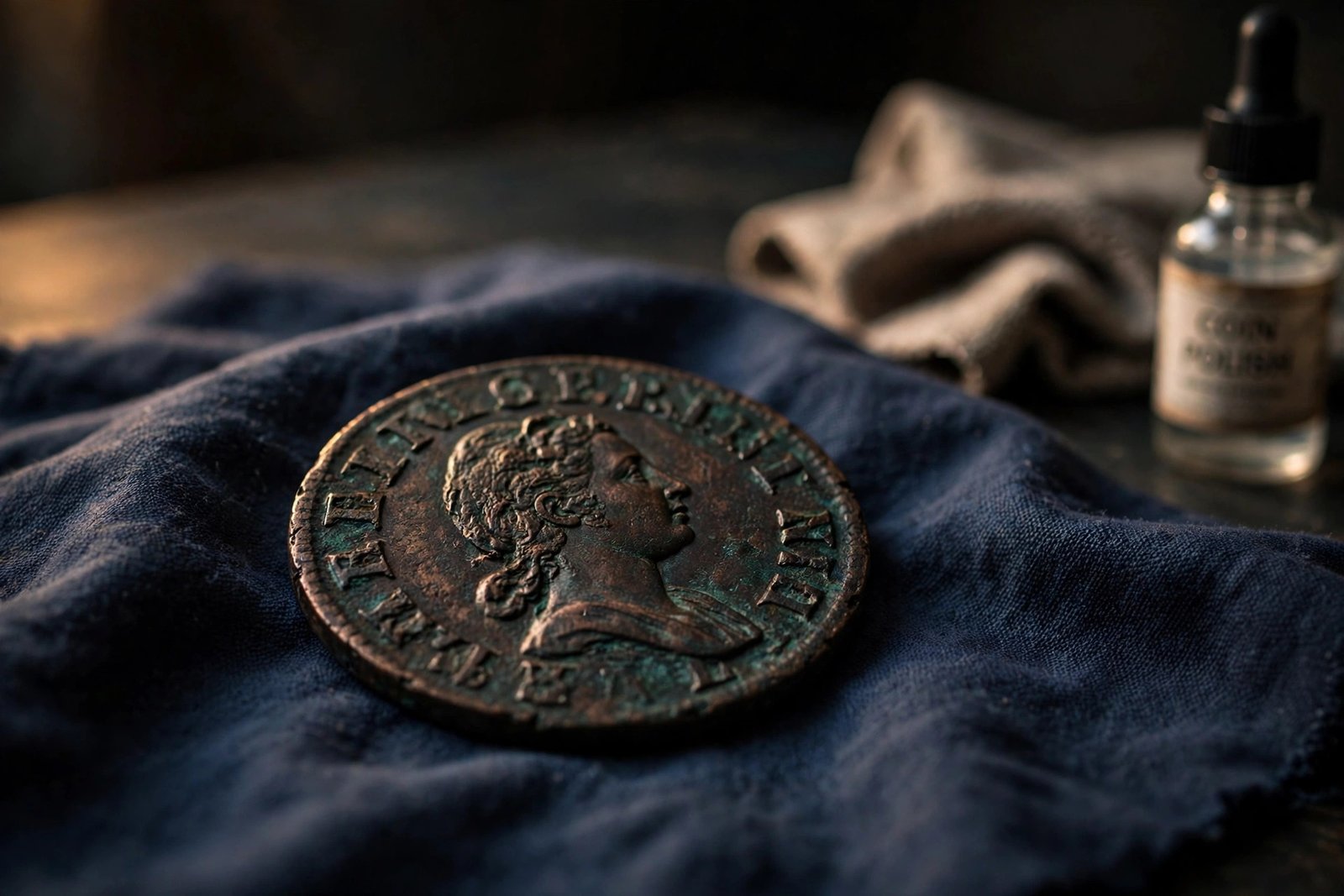
- Loose surface dirt? Leave it, or use plain distilled water only. A brief soak in distilled water and patting — never rubbing — dry with a soft cloth is the limit of safe intervention, and even that is unnecessary for most coins. If a coin might be valuable, do nothing at all until an expert has seen it.
Our beginner guide to how to grade a coin explains why original surfaces and luster matter so much to the grade you will get.
Step by step: you just found a dirty old coin
- Stop. Put the cleaners down. Nothing about a coin gets worse in the next day or week, but ten seconds with the wrong cloth can be permanent.
- Pick it up by the edges and put it on a soft cloth, not a hard table where it can slide and scratch.
- Photograph both sides as found. Those pictures are useful if you later ask a dealer or a grading service about it.
- Identify it before anything else — date, mint mark, type. Use our guide to the most valuable pennies still hiding in circulation if it is a cent, and check its date before assuming it is common.
- Store it safely that same day in a non-PVC flip or capsule, kept dry.
- Get an opinion before any “improvement.” If the coin might be a key date, skip straight to expert advice and consider certification. Details are in how to sell your coins safely.
5 other mistakes that destroy value
Cleaning gets the headlines, but these five quietly cost beginners just as much:
- Spending a key date before checking it. A worn 1914-D cent spent at face value is gone forever. It takes two minutes to check a date and mint mark before any old coin goes back into a pocket or a change jar.
- Storing loose coins together. Coins rattling in a tin or a drawer scratch and dent each other. That contact damage is permanent and drags every grade down. Separate them.
- Removing a coin from a certified holder. That sealed PCGS or NGC holder is trusted by buyers everywhere. Crack it out and the trust is gone — a new submission might grade lower, or come back with a problem you did not expect.
- Trusting a single unsourced internet price. One inflated listing, one forum post, or one video claim is not a value. Check recent sold prices from more than one serious source, and price your coin in the condition it is actually in.
- Selling to the first buyer without a second opinion. The first offer is information, not a conclusion — especially for a coin you have not identified properly. A second quote costs little and sometimes changes the result by a lot.
A note on coins that are already cleaned
If you inherited a coin that someone cleaned long ago, do not make it worse trying to fix it, and do not throw it away either. Cleaned key dates still have real value — just substantially less than an original example, often half or less depending on how harsh the cleaning was. Honesty is the whole game here: describe it as cleaned if you ever sell it, because the buyer will know anyway.
FAQ
My coin is black with tarnish. Isn’t that damage too?
No. Natural toning on silver is normal, often attractive, and frequently adds eye appeal. Tarnish that developed slowly over decades is part of an original surface. Removing it is what causes the damage.
What about professional conservation — is that the same as cleaning?
No, and the difference matters. Professional conservation services remove harmful contaminants without altering the metal or the toning, and they disclose what was done. Kitchen and hobby cleaning alters the surface itself. If a coin needs help, that decision belongs to an expert, not a first attempt at home.
Can a grading service tell if a coin was cleaned years ago?
Almost always, yes. Hairlines, disturbed luster, and unnatural colour survive for decades and are exactly what graders are trained to spot. Assume any cleaning will be found and labelled.
I already cleaned a common coin. Did I lose much?
Probably not much money — a common, low-value coin was never worth a great deal. Treat it as a cheap lesson, keep it as your reminder, and protect the next good coin you find.
Values are estimates based on grade, authenticity and current market demand at the time of writing (October 2026). A cleaned, damaged or counterfeit coin is worth far less. Get valuable coins certified by PCGS or NGC.