Wheat Penny Value Guide (1909–1958): Key Dates, Mint Marks & Prices
Wheat Penny Value Guide (1909–1958): Key Dates, Mint Marks & Prices
Could the most valuable coin you own be a one-cent piece sitting in a jar, a drawer, or an old coffee can?
For a lot of people, it could. Lincoln wheat cents were made from 1909 to 1958, and most of them are worth only a few cents. But a small number of dates and mint marks are worth hundreds — and a few are worth thousands. This guide shows you exactly which ones to pull out before you spend, roll, or sell anything.
Quick answer: Most worn wheat pennies are worth about 3–5 cents each in bulk. The money is in the key dates: 1909-S VDB, 1914-D, 1931-S, and 1922 No D lead the list. Check every date from 1909–1931 carefully — that is where most of the valuable wheat cents hide.
What is a wheat penny?
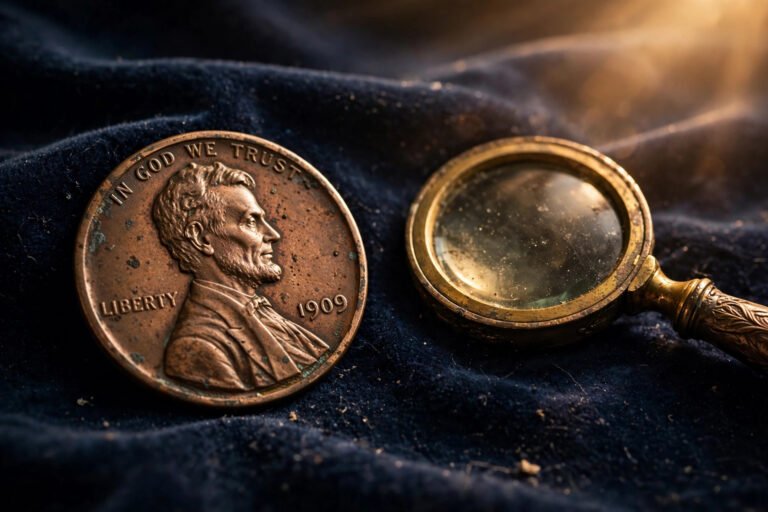
The Lincoln cent started in 1909, the 100th anniversary year of Abraham Lincoln’s birth. It was the first regular US coin to show a real president.
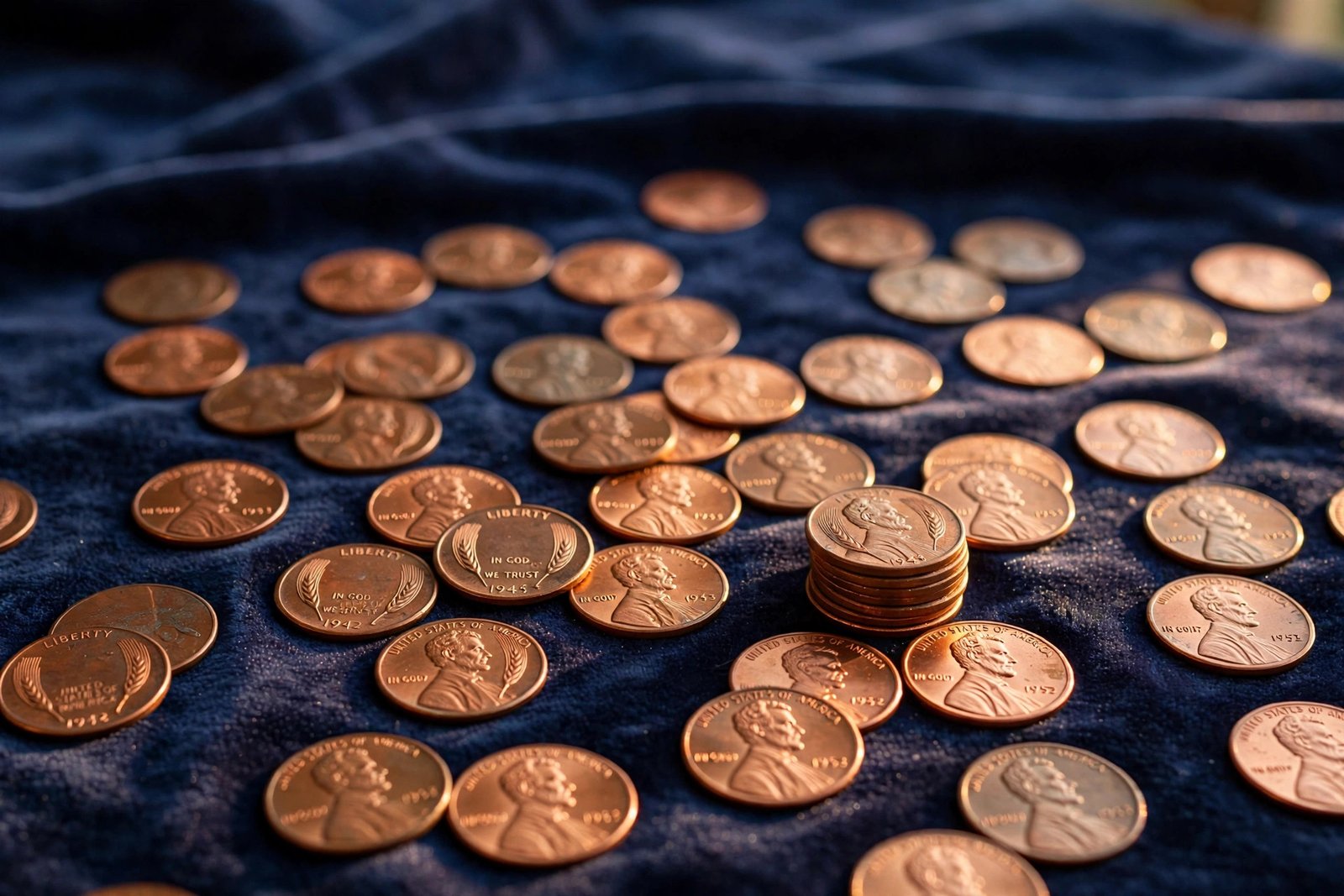
The first design, used until 1958, has Lincoln on the front (the obverse) and two wheat ears on the back (the reverse). That back design is why collectors call them wheat pennies, wheat cents, or “wheaties.”
Most wheat cents are bronze: 95% copper, weighing 3.11 grams. There are two famous exceptions:
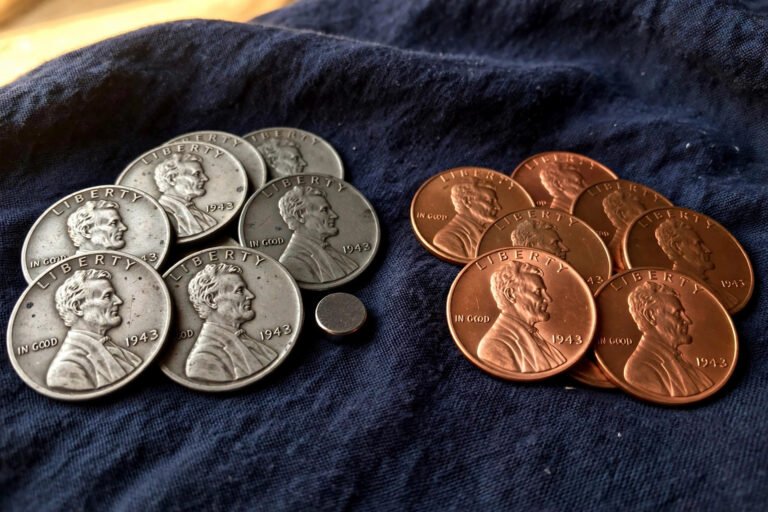
- 1943: made of zinc-coated steel, weighing 2.7 grams, to save copper for World War II.
- 1944–1946: made from recycled shell cases, still bronze and still 3.11 grams.
In 1959 the wheat back was replaced by the Lincoln Memorial design, which is why the wheat series stops in 1958.
Where is the mint mark?
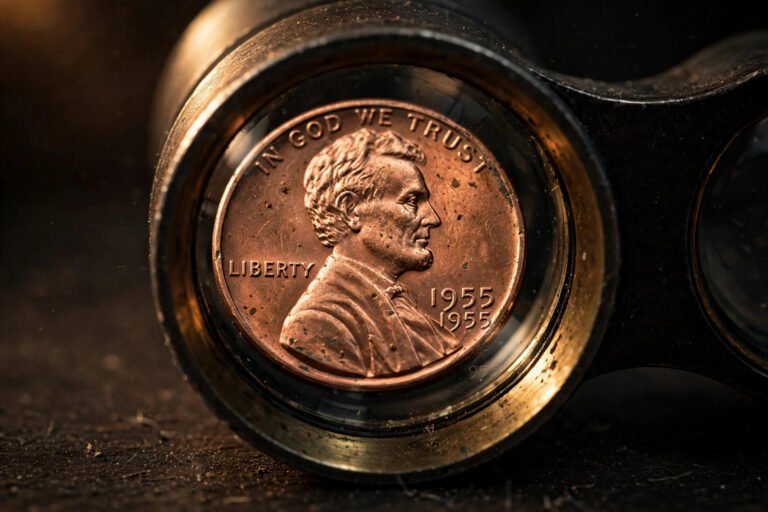
Flip the coin to the front and look under the date.
- No mint mark — made in Philadelphia
- D — made in Denver
- S — made in San Francisco
That tiny letter can change everything. A 1914 penny from Philadelphia is a common coin worth a dollar or two. A 1914-D, with that small D under the date, is one of the most famous key dates in the whole series.
A word of warning: on worn coins the mint mark can be faint, and on faked coins it can be added. We will come back to fakes below.
The key dates to look for
Start with these. If you find one, set it aside in a soft holder and do not clean it.
The big four
1909-S VDB. The very first Lincoln cent issue from San Francisco, with designer Victor David Brenner’s initials, VDB, in large letters at the base of the reverse. Only 484,000 were made before the initials were removed later in 1909. It is the most famous wheat cent of all.
1914-D. Only 1,193,000 were made, and few were saved in high grades because people spent them during World War I and the Depression. Genuine, problem-free examples are scarce at every grade.
1931-S. A Depression-era coin with a mintage of only 866,000, the second-lowest in the series after the 1909-S VDB. Luckily many were saved, so circulated examples are affordable — but they are never common in change.
1922 No D. All 1922 cents were struck in Denver, but some were made with worn dies that left the D so weak it disappeared completely. The true “No D” version, from one specific die pair, is a recognised variety and is worth far more than a normal 1922-D. Faint, weak D coins are worth much less, so this one really needs expert authentication.
Semi-key dates worth pulling out
These are not as famous, but every one is worth well over face value: 1909-S (regular, without VDB — about 1.825 million made), 1910-S, 1911-S, 1912-S, 1913-S, 1914-S, 1915-S, 1922-D, 1924-D, and 1931-D.
As a simple rule: any S-mint coin from 1909–1915, and almost any wheat cent from 1930–1933, deserves a second look.
Value table: key dates by grade
Values below are conservative guide ranges for genuine, problem-free coins. Colour matters on uncirculated copper: “red” coins sell for more than “red-brown,” which sell for more than “brown.”
| Coin | Good | Fine | Approx. value in higher grades |
|---|---|---|---|
| Common dates (most 1934–1958) | $0.03–$0.05 | $0.05–$0.15 | $1–$3 uncirculated, common dates |
| 1909 VDB (Philadelphia) | $8–$12 | $12–$18 | $35+ uncirculated |
| 1909-S (no VDB) | $90–$120 | $140–$180 | $300+ Extremely Fine |
| 1909-S VDB | $650–$850 | $900–$1,100 | Several thousand in Mint State red |
| 1914-D | $180–$250 | $300–$400 | $1,500+ Extremely Fine |
| 1931-S | $60–$80 | $85–$110 | $200+ uncirculated |
| 1922 No D (strong reverse) | $550–$750 | $800–$1,100 | $2,000+ Extremely Fine |
What to look for — checklist
- Read the date first, then check under it for a D or S mint mark
- Pull out every 1909–1915 S-mint, every 1914-D, 1922, 1924-D, and 1930–1933 coin
- Check the back of every 1909-S for the large VDB letters at the very bottom
- Weigh anything that looks odd: 3.11g is normal bronze, 2.7g is a 1943 steel cent
- Note the colour and surfaces — original, even toning is good; bright, shiny, and “too clean” is a warning sign
- Look at the rims and fields for scratches, dents, corrosion, or old cleaning lines
Common mistakes and fakes
Cleaning your coins. This is the number one value killer. A cleaned wheat cent can lose half its value or more. Collectors pay for original surfaces, not shine. Never polish, dip, scrub, or use a pencil eraser on a coin.
Trusting every key date at face value. The 1909-S VDB and 1914-D are two of the most faked US coins. Fakes are often made by adding a mint mark to a common coin, or altering a similar date. Look for a mint mark that sits at a slightly wrong angle, looks thicker than normal, or has disturbed metal around it.
Assuming a weak 1922-D is a No D. Most weak-D coins are just weak strikes worth a small premium. Only one die variety counts as the true No D, and certification is how buyers tell the difference.
Paying key-date prices for damaged coins. Holes, heavy scratches, corrosion, and bent rims cut values sharply at every grade. The table above assumes problem-free coins.
What to do if you find one
- Stop handling it by the faces. Hold it by the edges only.
- Do not clean it — for any reason, even if it looks dirty.
- Put it in a cardboard coin flip, a soft pouch, or between two pieces of plain paper.
- Write down the date, mint mark, and anything unusual, and take clear photos of both sides.
- Compare it with the table above to see if it might be a key or semi-key date.
- If it could be worth a few hundred dollars or more, get it certified by PCGS or NGC before you sell. Certification proves it is genuine and graded, and buyers pay full price for that proof.
FAQ
Are most wheat pennies worth a lot of money?
No. Most circulated wheat cents from the 1940s and 1950s are worth about 3–5 cents each in bulk. A few key dates are worth hundreds or thousands, which is why checking dates and mint marks is worth your time.
How much is a 1909-S VDB worth?
Roughly $650–$850 in Good condition, around $1,000 or more in Fine to Very Fine, and several thousand dollars in Mint State with original red colour. Exact value depends on grade, colour, and certification.
How can I tell if my wheat penny is rare?
Check the date and the mint mark under the date against the key date list in this guide. Low mintage dates — 1909-S VDB, 1914-D, 1931-S, and 1922 No D — are the ones collectors chase.
Should I get a wheat penny graded?
If it is a key date, looks uncirculated, or might be worth a few hundred dollars or more, yes. For common dates worth a few cents, grading costs more than the coin, so enjoy those raw in an album or folder.
Once you have checked your wheat cents, keep going — several other pennies are worth even more than the keys in this guide, and you will find them all in our guide to the most valuable pennies.
Values are estimates based on grade, authenticity and current market demand at the time of writing (October 2026). A cleaned, damaged or counterfeit coin is worth far less. Get valuable coins certified by PCGS or NGC.