1909-S VDB Lincoln Cent: The First-Year Penny Everyone Looks For
1909-S VDB Lincoln Cent: The First-Year Penny Everyone Looks For
If you could check just one wheat penny first — before all the others — which one should it be?
For most collectors, the answer is the 1909-S VDB. It is the very first Lincoln cent from the San Francisco Mint, it carries its designer’s initials in big letters on the back, and the public outcry over those initials got them removed within weeks. The result is a first-year coin, a low mintage, and a story everyone in the hobby knows.
Here is how to identify a real one, what it is worth, and how to avoid the fakes that surround this coin more than almost any other penny.
Quick answer: The 1909-S VDB is a 1909 Lincoln cent with an S mint mark under the date and large VDB initials at the base of the reverse. Only 484,000 were made. Genuine examples are worth roughly $650–$850 in Good condition, around $1,000 or more in Fine to Very Fine, and several thousand in Mint State red.
The story in 60 seconds
Abraham Lincoln first appeared on the cent in 1909, the centenary of his birth. The designer was Victor David Brenner, a sculptor, and like many artists he signed his work: the letters VDB appear at the base of the reverse (the back), under the wheat ears.
The coins were released in early August 1909 — and the initials immediately caused a fuss. Newspapers complained that the letters were free advertising for the designer. Within days the Mint removed them, and production of 1909 cents continued with a plain reverse.
That short run is the whole point. San Francisco had struck just 484,000 cents with the VDB before the change. For comparison, San Francisco also made about 1.825 million regular 1909-S cents without the VDB after the initials came off — and Philadelphia made millions more of each version.
There is a neat ending to the story, too: from 1918 onwards, tiny VDB initials returned to the coin, placed on the angled truncation at the base of Lincoln’s bust on the front. They are still there on modern Lincoln cents — so small most people never notice them.
How to identify a genuine 1909-S VDB
You need all three of these features. A coin missing any one of them is a different, much cheaper coin:
- Date: 1909, on the front.
- Mint mark: S, in the small space directly under the date. That S means San Francisco.
- VDB on the reverse, in clear, fairly large letters centred at the very bottom rim of the back, between the ends of the wheat stalks.
Check them one at a time. A 1909 VDB without the S is the common Philadelphia version — nice, but worth about $8–$20 circulated. A 1909-S without the VDB is a semi-key coin worth roughly $90–$180 in lower grades. Only the combination of all three is the famous key date.
What is it made of, and what does it weigh?
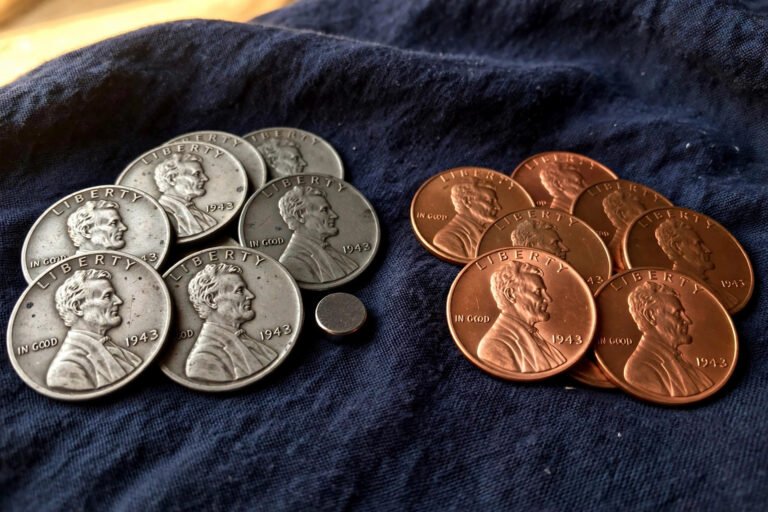
Like almost all wheat cents, the 1909-S VDB is bronze — 95% copper — and weighs 3.11 grams. It is not magnetic. Weight will not separate it from other 1909 cents (they are all the same), but it is a useful sanity check against some crude copies, which can be the wrong weight or even magnetic if cast from the wrong metal.
Value table
Copper colour drives uncirculated prices: RD (full original red) is worth most, then RB (red-brown), then BN (brown). Ranges below are for genuine, problem-free coins.
| Grade | Approx. value — circulated | Notes |
|---|---|---|
| Good (G-4) | $650–$850 | Date and VDB readable, heavy wear |
| Fine (F-12) | $900–$1,100 | Clear wheat lines starting to show |
| Very Fine (VF) | $1,100–$1,400 | Light wear on the highest points |
| Extremely Fine (EF) | $1,400–$1,800 | Sharp detail, mostly original surfaces |
| Mint State, brown/red-brown | $2,000–$3,500 | Uncirculated, toned colour |
| Mint State, full red | Several thousand | The finest red examples bring the strongest prices |
Two honest cautions: a cleaned or damaged example can be worth a fraction of these numbers, and an uncertified example will usually sell for less, because buyers are protecting themselves against fakes.
What to look for — checklist
- Date reads exactly 1909, with no sign the digits were altered
- S mint mark sits under the date, upright, and matches the style of other 1909-S coins
- VDB letters on the reverse are bold, even, and centred at the base
- The wheat ears and lettering have the same amount of wear as the rest of the coin — a suspiciously “newer” area can mean tampering
- Weight is about 3.11 grams and the coin is not magnetic
- Surfaces look original — no bright shine, no fine cleaning scratches, no added colour
Common mistakes and fakes
This coin is famous, valuable, and small — which makes it one of the most faked and altered coins in US collecting. Learn the three classic tricks:
The added S. A common 1909 VDB from Philadelphia (worth under $20 circulated) gets an S mint mark added with a tiny tool or adhesive. The added letter often sits at a slightly wrong height or angle, and the metal around it may look disturbed under a magnifier.
The added VDB. A regular 1909-S (no VDB) gets initials engraved or built up on the back. Altered letters tend to look too sharp, too thin, or uneven compared with the honest wear elsewhere on the coin.
Wholesale copies. Cast and struck counterfeits exist, from crude to worrying. Wrong weight, a magnetic reaction, mushy detail, or a “too perfect” look at a bargain price are all stop signs.
The defence is simple: never pay key-date money for an uncertified 1909-S VDB, and if you own a candidate, certification is how you turn “I think it’s real” into something a buyer will pay full price for.
Cleaning is the other big mistake. This coin survived 115-plus years. A quick polish can turn a $1,000 coin into a few-hundred-dollar problem coin in thirty seconds. Leave the dirt alone.
What to do if you find one
- Pick it up by the edges and put it straight into a coin flip or soft holder.
- Do not clean it, and do not let anyone else “shine it up” for you.
- Confirm the three features — 1909 date, S under the date, VDB on the reverse base.
- Photograph both sides in good light, and note the weight (3.11g is correct).
- Submit it to PCGS or NGC for authentication and grading, or take it to a reputable dealer who can submit it for you. For this coin, certification is not optional if you plan to sell.
- Store the certified coin in its holder, somewhere dry.
FAQ
How many 1909-S VDB pennies were made?
Only 484,000. The initials were removed mid-1909 after public complaints, so the San Francisco VDB version had a very short production run — one reason it has been a key date ever since.
Where exactly are the VDB initials on a 1909-S VDB?
On the reverse (back) of the coin, centred at the very base, just above the rim between the bottom ends of the two wheat stalks. On the 1909 first issue they are large and easy to read — not hidden.
Is a 1909 VDB without an S mint mark worth much?
It is a genuine first-year coin and a nice collectible, but Philadelphia made millions of them. Circulated examples are typically worth about $8–$20, far less than the San Francisco version. Always check for the S under the date.
How can I be sure my 1909-S VDB is genuine?
Check the date, mint mark position, VDB style, and weight (3.11 grams, non-magnetic) — then get it certified. Added mint marks and added initials are common on this issue, and PCGS or NGC authentication is the standard the market trusts.
The 1909-S VDB is the crown of the wheat penny series — and it is only one of the valuable cents waiting in old jars and rolls, as our guide to the most valuable pennies shows.
Values are estimates based on grade, authenticity and current market demand at the time of writing (October 2026). A cleaned, damaged or counterfeit coin is worth far less. Get valuable coins certified by PCGS or NGC.