Buffalo Nickel Value Guide (1913–1938): Key Dates, Mint Marks & Prices
If you have ever emptied an old jar of coins and found a nickel with a Native American portrait on one side and a bison on the other, you have held one of the most beloved coins in American history. The Buffalo nickel — officially the Indian Head nickel — ran from 1913 to 1938, and it is still one of the first coins new collectors fall in love with. It is also one of the easiest to misjudge: most examples are worth only a dollar or two, while a handful of dates and varieties are worth thousands. The difference is in the date, the mint mark, and whether the coin still shows its details.
This guide covers the whole series the way a beginner actually needs it: how to tell the two 1913 types apart, which dates are genuinely scarce, what the famous errors look like, and what to do about the series’ most frustrating feature — the date that wears clean off.
Quick answer
What it is: the Buffalo (Indian Head) nickel, struck 1913–1938, designed by James Earle Fraser. It is 75% copper and 25% nickel — it contains no silver, so there is no melt-value floor underneath it. Value comes entirely from collector demand. Most are modest: a common dated Buffalo nickel in circulated condition is typically worth roughly $1–$5. A dateless one is worth less, usually under a dollar as a curiosity or filler. The big three to check first: the 1913-S Type 2 (mintage 1,209,000), the 1926-S (mintage 970,000, the lowest of any regular issue), and the two famous varieties — the 1918/7-D overdate and the 1937-D 3-legged — both worth four figures even in low grades. The trap: never clean one, and never use acid to “restore” a worn date. Acid etching damages the surface and leaves the coin permanently discounted. More on that below.
A short history: two designs in one year
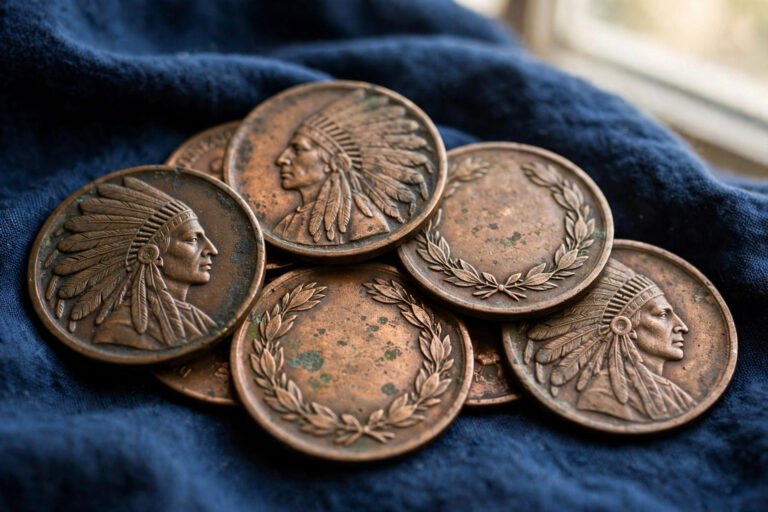
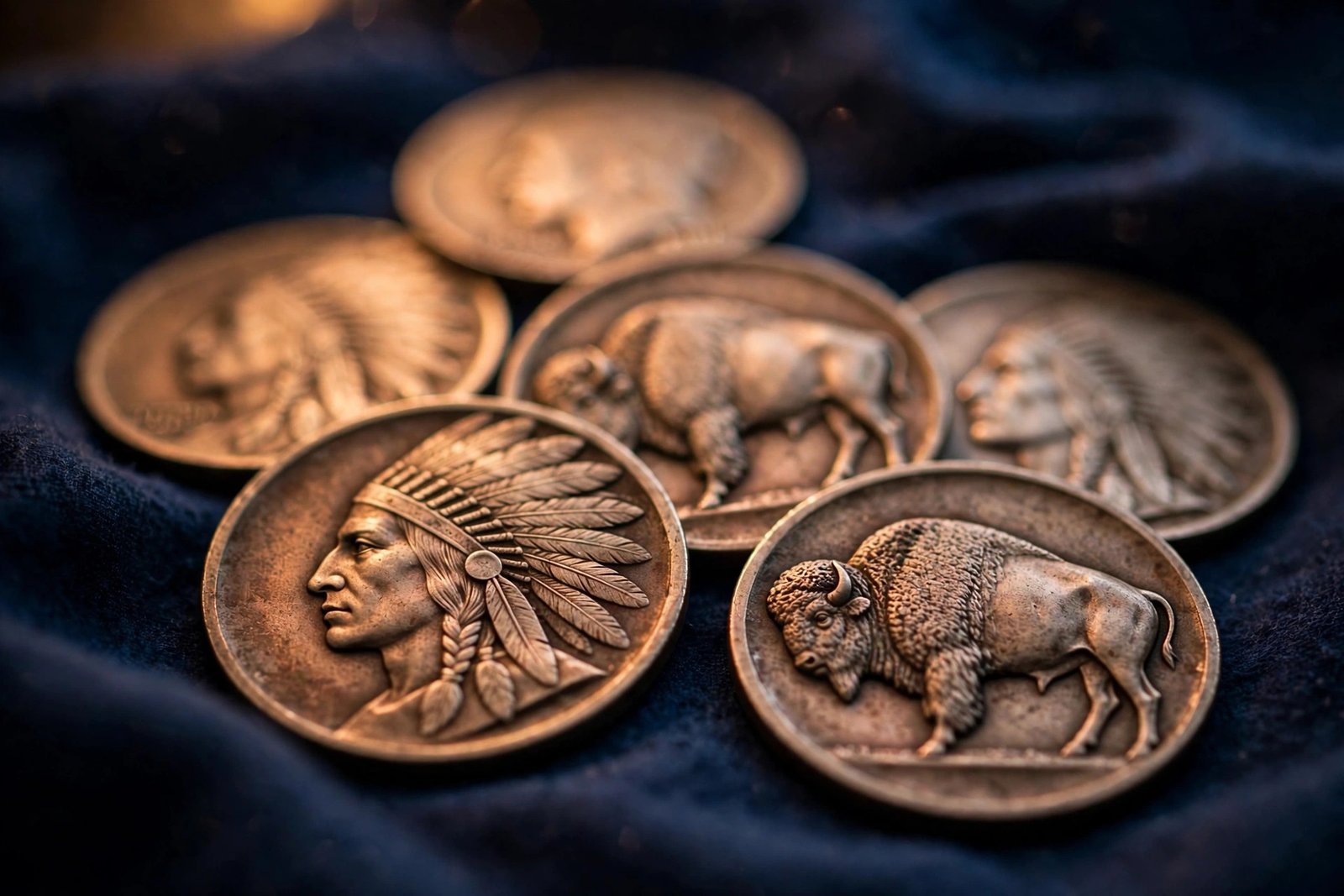
The Buffalo nickel replaced the Liberty Head nickel in 1913. Fraser’s obverse shows a composite Native American portrait, reportedly modelled on three chiefs, with LIBERTY at the upper right and the date raised on the shoulder. The reverse shows an American bison facing left, reportedly modelled on Black Diamond of the New York Zoological Gardens, with FIVE CENTS below.
In its first year the design changed, and that change matters for identification. The original Type 1 (1913 only) shows the bison standing on a raised mound, with FIVE CENTS stamped on the mound itself. The mound wore down quickly in circulation, taking the denomination with it, so partway through 1913 the Mint switched to Type 2: the bison stands on flat, line ground and FIVE CENTS sits recessed below it, protected from wear. Type 2 ran from late 1913 through 1938.
The practical payoff: a dateless coin with a Type 1 reverse is a 1913 coin — the raised mound gives it away even when the date is gone. A dateless Type 2 coin could be from any year from late 1913 to 1938, and usually cannot be dated at all.
The series ended in 1938, when the Jefferson nickel took over. No Buffalo nickels were struck in 1922, 1932 or 1933, and the final year, 1938, was struck at Denver only (7,020,000 pieces). The coin weighs 5.00 grams, measures 21.2 millimetres across, and has a plain edge. The mint mark — D for Denver, S for San Francisco, none for Philadelphia — sits on the reverse below FIVE CENTS on Type 2 coins.
What to look for: the beginner’s checklist
Work through these in order whenever you pick up a Buffalo nickel:
- Is there a date? Look at the shoulder on the obverse. The date sits raised on the highest point of the design, so it is the first thing to wear away. A full, sharp date is worth more than a partial one, and a “full horn” — the bison’s horn fully visible on the reverse — is the classic sign of a well-struck, lightly worn coin.
- Type 1 or Type 2? Raised mound under the bison means Type 1, and therefore 1913. Flat ground means Type 2.
- Mint mark? Check below FIVE CENTS on the reverse. No mark means Philadelphia; D or S means Denver or San Francisco. Branch-mint coins from the late 1910s and 1920s are often weakly struck, so a soft-looking coin is not automatically a worn coin — the hard copper-nickel alloy was tough on dies.
- Is it one of the key dates? Compare the date and mint mark against the list below before assuming anything is common.
- Is it a variety? On any 1937-D, count the bison’s legs. On any 1918-D, look closely at the 8 in the date for a 7 showing through.
- Condition and originality. Uncleaned surfaces, full detail and natural lustre beat a shiny, scrubbed coin every time.
The key dates and varieties
1913-S Type 2 — the classic key date. San Francisco struck only 1,209,000 Type 2 nickels in 1913, and the date wore off many of them in circulation, so well-dated survivors are scarcer than the mintage alone suggests. It is the date most collectors chase first when building a set.
1926-S — the lowest mintage of all. At 970,000 struck, the 1926-S has the smallest mintage of any regular business-strike Buffalo nickel — lower even than the 1913-S Type 2. Curiously, it is not especially expensive in low circulated grades, because it was released just as collecting was catching on and more examples were saved; but in uncirculated condition it is genuinely rare and very expensive. Mintage alone never tells the whole story.
1918/7-D overdate — the hidden 7. A Denver die for 1918 was hubbed over a 1917 hub, so the 7 shows through the 8 in the date. Denver’s total 1918 mintage was 8,362,000, but the overdate’s share of that total was never recorded — never let anyone quote you an overdate mintage. The variety was first recognised by collectors around 1930, by which time years of circulation had already consumed most examples. The diagnostic, besides the doubled date, is a characteristically left-leaning D mint mark. Uncirculated examples are estimated at only around 85–110 known.
1937-D 3-legged — the most famous error in the series. A clashed reverse die at Denver was polished too aggressively, removing most of the bison’s front right leg — only the hoof remains. Every genuine example comes from that one die. Denver struck 17,826,000 nickels in 1937, but that is the year’s total, not the variety’s count: estimates put the 3-legged pieces at roughly 20,000 struck, with about 10,000 survivors in all grades. Beyond the missing leg, look for a pitted, “moth-eaten” texture around the Indian’s neck and small die lumps under the bison’s belly. Fakes are common, including ordinary 1937-D coins with a leg deliberately removed — authentication is essential.
Semi-keys worth knowing. Several dates carry real premiums in circulated grades: the 1913-S Type 1 (2,105,000), 1914-D (3,912,000), 1915-S (1,505,000), 1921-S (1,557,000), 1924-S (1,437,000) and 1931-S (1,200,000, the only issue of that year). And for context: Philadelphia alone struck 119,001,420 nickels in 1936, the highest single-year production of the series. Age alone does not mean value — a 1936 Philadelphia nickel is one of the commonest coins in the series.
Value table by grade
These are commonly cited guide ranges, framed as estimates — guides disagree, especially on the rare varieties, and prices move with demand. Condition is everything: a coin’s grade, strike and originality matter as much as its date. Unlike the silver War Nickels of 1942–1945, which have a silver floor under their value, a Buffalo nickel’s value is pure collector demand — which is why judging grade correctly matters so much before you price one.
| Coin | Low circulated (Good–Fine) | Very Fine–About Uncirculated | Uncirculated (MS-63) |
|---|---|---|---|
| Common dated (e.g. 1935–1937 Philadelphia) | About $1–$5 | About $5–$20 | About $30–$60 |
| Dateless (any year) | Under $1 | — | — |
| 1913-S Type 2 | About $230–$320 | About $350–$580 | About $1,000 |
| 1926-S | About $20–$150 | Several hundred | Several thousand |
| 1918/7-D overdate | Four figures ($1,000+) | Several thousand | Five figures+ |
| 1937-D 3-legged | About $600–$1,200 | Several thousand | Several thousand+ |
| Semi-keys (1914-D, 1915-S, 1921-S, 1924-S, 1931-S) | About $25–$150 | About $150–$400 | $500+ |
Two patterns stand out. First, the jump from circulated to uncirculated is enormous for the keys — a 1926-S that is modest in Good becomes a five-figure coin in MS-65. Second, the 1937-D 3-legged and 1918/7-D are expensive in every grade: there is no cheap way into either variety. If a deal on one of them looks too good, it almost certainly is.
The dateless problem — and the acid question
No discussion of Buffalo nickels is complete without the dateless problem, because it is the series’ defining flaw. Fraser’s date sat raised on the shoulder, the highest and most exposed point of the obverse, and the Mint never fixed it. By the 1950s, countless Buffalo nickels in circulation had lost their dates entirely, and dateless examples remain the commonest form of the coin today.
Beginners often hear about ferric-chloride products sold as “date restorers” that etch a worn date back into visibility. Here is the honest framing: acid can sometimes reveal a date, but it does so by eating into the surface, and the coin is then treated as altered and damaged by serious collectors. It does not restore collector value — it trades a dateless coin for a damaged one. Acid-restored examples of even the 1918/7-D do trade, but at a steep discount to untreated examples.
The rule is simple: never use acid on a coin that might be a key date until it has been identified another way (reverse type, mint mark, die characteristics), and never present acid as a value-adding restoration. On a dateless common coin, the curiosity of knowing the date may be worth more to you than the coin itself — but that is a personal choice, not an investment move. And the same rule that applies to every coin applies here: never clean a coin to make it look better — cleaning strips original surfaces and can cut value in half or worse.
Fakes and warnings
The 1937-D 3-legged is the series’ most faked coin, because the variety is famous and the alteration is simple: remove a leg from an ordinary 1937-D. Genuine examples show the die-polishing markers described above, and any 3-legged coin should be certified by PCGS or NGC before serious money changes hands. The 1918/7-D is also faked and altered, and dateless coins are sometimes sold with acid-restored dates presented as natural — check for the tell-tale etched, dull surface around the date.
More generally, beware of “unsearched rolls” of Buffalo nickels sold online. Genuine unsearched rolls effectively do not exist any more; the contents have usually been picked over, and the key dates are long gone. Buy key dates certified, or from a dealer you trust, and be sceptical of any raw coin priced far below its guide range.
What to do if you find one
- Note the date, mint mark and type (mound or line ground) before anything else.
- Do not clean it, and do not use acid on it. Put it in a flip or holder straight away.
- Check it against the key-date list above — especially any 1937-D (count the legs) and any 1918-D (check the 8).
- Judge the grade honestly: full date, full horn and sharp details put it above the common run.
- If it looks like a key date or variety, or an uncirculated example, consider PCGS or NGC grading before selling — authentication is where the premium is protected.
- Otherwise, keep it: Buffalo nickels are one of the cheapest and most satisfying sets to build from dealer bins and old collections, and every dated example is a genuine piece of early-20th-century America.
The Buffalo nickel rewards patience more than luck. Most examples you find will be common, dateless or both — and that is fine. The series is collected precisely because the gap between a one-dollar coin and a thousand-dollar coin can be a single letter under FIVE CENTS, or a single missing leg. Check the date, check the mint mark, count the legs, and leave the acid in the drawer.
FAQ
Are Buffalo nickels made of silver?
No. Buffalo nickels are 75% copper and 25% nickel, weighing 5.00 grams. Despite their grey-white colour, they contain no silver at all, so unlike pre-1965 dimes, quarters and halves they have no melt-value floor — their value is entirely collector demand.
Why do so many Buffalo nickels have no date?
The date was placed raised on the Indian’s shoulder, the highest and most worn point of the obverse, and the design was never corrected. In circulation the date wore away, so many Buffalo nickels became dateless — and a dateless coin usually cannot be attributed to a year, except that a Type 1 (raised mound) reverse means 1913.
What is the rarest Buffalo nickel?
By regular-issue mintage, the 1926-S (970,000 struck) is the lowest. The 1913-S Type 2 (1,209,000) is the classic key date. The two famous varieties — the 1918/7-D overdate and the 1937-D 3-legged — are rarer still in practice, with the 3-legged estimated at roughly 20,000 struck from a single die.
Should I use acid to restore a worn date on a Buffalo nickel?
No, not if you care about value. Acid etching reveals a date by damaging the surface, and the coin is then treated as altered and discounted by collectors. It never adds value, and it must never be used on a coin that might be a key date before it has been identified another way.
Values are estimates based on grade, authenticity and current market demand at the time of writing. A cleaned, damaged or counterfeit coin is worth far less. Get valuable coins certified by PCGS or NGC.