How to Grade a Coin (Beginner’s Version, With Photos to Compare)
How to Grade a Coin (Beginner’s Version, With Photos to Compare)
Two pennies can share the same date, the same mint, and the same design — and one can be worth ten times the other. The difference is almost always grade.
Grade is simply a careful way of describing condition. Learn to judge it honestly, and you will stop overpaying for worn coins and stop undervaluing good ones. You will not become a professional grader in one afternoon — you only need to get close enough to make good decisions.
Quick answer
US coins are graded on the Sheldon scale from 1 to 70. Circulated coins run from Poor-1 to AU-58 (About Uncirculated). Uncirculated coins are Mint State, MS-60 to MS-70. Five things decide the grade: wear on the high points, luster, contact marks, strike, and eye appeal. Always hold a coin by its edges, judge it in good light, be conservative, and remember: on a key date, a single grade point can mean thousands of dollars, so do not over-grade your own coin.
The Sheldon scale, in plain English
Beginners do not need to memorise all 70 numbers. Learn the bands first.
| Grade band | What it looks like |
|---|---|
| Poor-1 to About Good-3 | Heavily worn, date barely readable, outlines only |
| Good-4 to Good-6 | Date and main design clear, heavy wear everywhere |
| Very Good-8 to Very Good-10 | Major features clear, some finer detail starting to show |
| Fine-12 to Fine-15 | Moderate wear, about half the fine detail visible |
| Very Fine-20 to Very Fine-35 | Light to moderate wear, most detail present |
| Extremely Fine-40 to EF-45 | Very light wear on high points only, sharp detail |
| About Uncirculated AU-50 to AU-58 | The faintest wear or friction on the highest points, most luster remains |
| Mint State MS-60 to MS-70 | No wear at all. Higher numbers mean fewer marks and better luster |
The biggest jump in that table is between AU-58 and MS-60. It is not about beauty. It is a yes-or-no question: has this coin circulated, or has it not? Even light friction on the highest points makes it AU, no matter how shiny it looks.
The five things graders actually judge
1. Wear on the high points
Wear shows first where the design stands tallest. On a Lincoln cent, check Lincoln’s cheek and jaw, and the wheat stalks on the back. On a Morgan dollar, check Liberty’s hair above the ear and the eagle’s breast feathers. Flat, smooth, slightly lighter patches on those spots mean circulation.
2. Luster
Luster is the soft glow an uncirculated coin throws as you tilt it under a light, sometimes described as a cartwheel effect. Circulated coins lose it first on the high points. A coin can be bright because it was cleaned — that is not luster, and it is covered in our guide to why you should never clean a coin.
3. Contact marks
Small nicks and scratches from other coins are called contact marks, or bag marks on larger silver coins. A few tiny marks are normal even in Mint State. Heavy, distracting marks in the open fields or across the portrait pull the grade down.
4. Strike
Strike is how fully the mint pressed the design into the metal. Some coins left the mint weakly struck, with soft detail that was never there to wear away. Weak strike is not wear, but it affects value and it fools beginners constantly.
5. Eye appeal
Two coins with the same technical grade are not always worth the same. Original colour, attractive toning, and an overall clean look add eye appeal. Ugly spots, fingerprints, and damage subtract it.
Compare these details, coin in hand
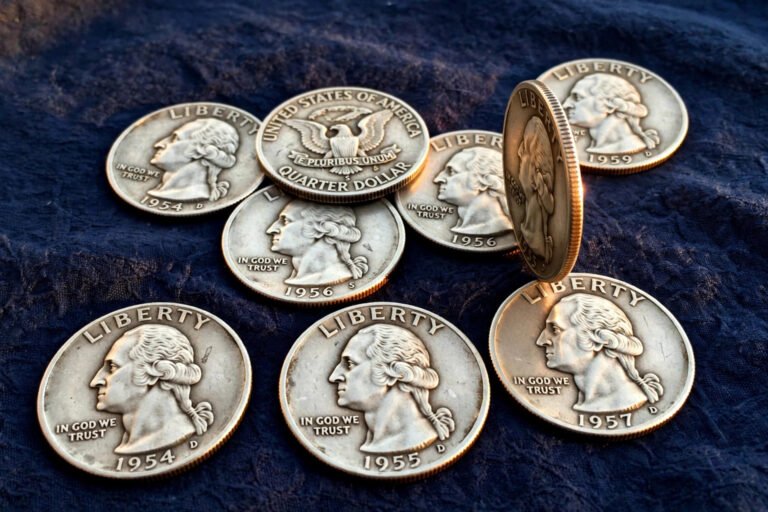
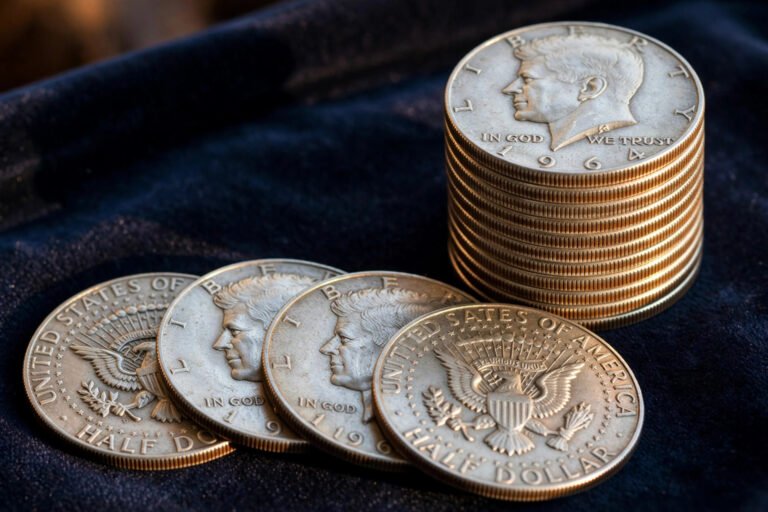
Use this table with your coin under a lamp — and for real photo comparisons, free photo references like PCGS Photograde exist online, showing actual coins at each grade.
| Detail to compare | Worn coin | Better coin |
|---|---|---|
| Date and mint mark | Thin, merged with the rim | Bold and fully separate |
| Hair / portrait detail | Flat mass, few separate strands | Individual strands and curls visible |
| Lettering | Soft edges, letters spreading | Sharp, squared-off edges |
| Rim | Dented, worn into the design | Full, even, and raised |
| Surfaces | Dull, scratched, or unnaturally bright | Original skin, natural luster, few marks |
Work through it on a common coin first. Practice on pocket change costs you nothing and trains your eye fast.
For copper coins: RD, RB, and BN
Copper and bronze coins — most US cents — carry a colour designation as well as a grade. RD means red: most of the original mint red remains. RB means red-brown: a mix of red and toned brown. BN means brown: fully toned. All else being equal, red is usually worth more, which is why cents in our Wheat Penny Value Guide are priced differently by colour. Colour never replaces the grade — a worn red coin is still worn.
Step by step: grade your first coin
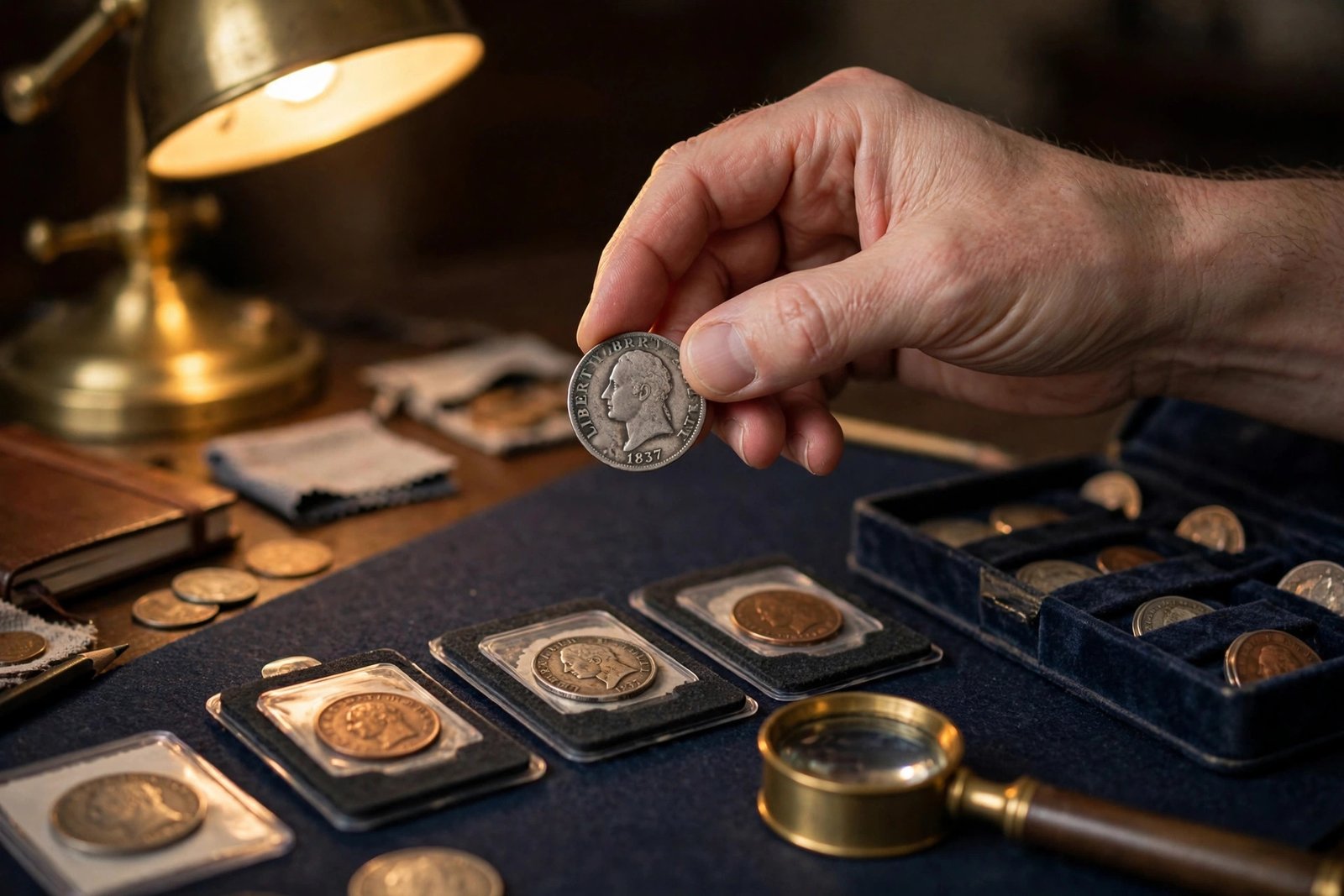
- Hold it by the edges only. Oils from fingers can leave permanent marks on surfaces, especially copper and proof coins.
- Use one good light source. A single lamp over a plain background is better than bright overhead room light.
- Answer the big question first. Is there any wear on the high points? If yes, you are in circulated territory, no matter how much shine remains.
- Check luster. Tilt the coin slowly. Original luster rolls across the surface. Cleaned or polished surfaces glare flatly.
- Count the marks honestly. Pay special attention to the open fields and the main portrait, where marks hurt most.
- Write down a range, not a single number. “Very Fine to Extremely Fine” is an honest beginner grade. Professionals disagree by a point or two as well.
- Price it at the lower end of your range. That protects you if you sell, and keeps you realistic if you keep it.
If yours is a key date, check it against The Most Valuable Pennies Still Hiding in Circulation before doing anything else.
Common grading mistakes
- Over-grading your own coin. Everyone does it at first. Wanting a coin to be better does not make it better, and buyers will grade it their way.
- Confusing shine with grade. A polished worn coin is still worn — and worth less than an untouched one.
- Grading in bad light. Dim light hides wear; harsh direct light hides luster. Change the angle before you decide.
- Ignoring the back. Grade both sides. As a rule, the worse side limits what the coin is worth.
- Assuming grading is exact. It is informed, subjective judgement. That is exactly why professional grading by PCGS or NGC adds market trust for valuable coins — a recognised, independent opinion in a sealed, labelled holder sells far more easily than “trust me, it’s uncirculated.”
When professional grading makes sense
If your honest range still suggests a coin may be worth a few hundred dollars or more, certification is usually worth considering. Fees, shipping, and insurance add up, so it rarely pays on common coins. Our guide to how to sell your coins safely walks through that maths. For everything else, a careful home grade, written as a range, is enough to organise, insure, and enjoy a collection.
FAQ
Can I learn to grade from one coin type and use it on others?
Yes, the principles transfer — wear, luster, marks, strike, and eye appeal apply to every US coin. The high points differ by design, so spend a few minutes learning where they are on each new type.
What does AU-58 mean if the coin looks uncirculated?
It means the grader found the faintest friction or wear on the highest points. AU-58 coins are often beautiful, and collectors sometimes prefer a choice AU-58 to a heavily marked MS-60.
Does a higher grade always mean a higher price?
Generally yes for the same date and mint mark, sometimes dramatically so. That is why a single grade point on a key date can mean thousands of dollars — and why honest, conservative grading matters.
Should I remove a coin from its holder to inspect it better?
No. A certified holder is part of the coin’s market trust. Removing it throws that trust away, and regrading is not guaranteed to give the same result.
Values are estimates based on grade, authenticity and current market demand at the time of writing (October 2026). A cleaned, damaged or counterfeit coin is worth far less. Get valuable coins certified by PCGS or NGC.