1944 Steel Penny: The “Wrong Metal” Wheat Cent Worth Real Money
A 1944 penny is supposed to be copper-coloured. So what do you do when the 1944 penny in your hand is grey, light, and sticks to a magnet?
Do not spend it. Do not clean it. And do not tell anyone it is worth a fortune until it has been certified — because if it is genuine, it is one of the rarest Lincoln cents ever made, and if it is not, it is probably a fake that fools beginners every single week.
The 1944 steel penny is the mirror image of the famous 1943 copper penny. In 1943 the Mint made pennies from steel by design; in 1944 it went back to bronze. A few leftover steel blanks got struck with 1944 dies anyway. Fewer than 40 are known across all three mints, and genuine examples have sold at auction for tens of thousands of dollars — and, for the finest San Francisco example, $408,000.
Quick answer: A normal 1944 penny is bronze, copper-coloured, weighs 3.11 grams, and does NOT stick to a magnet. A genuine 1944 steel penny is grey, zinc-coated steel, weighs 2.7 grams, and sticks firmly to a magnet. Only about 30–40 are known in total — roughly 25–30 from Philadelphia, about 7 from Denver, and just 2 confirmed from San Francisco. Genuine certified examples are worth tens of thousands of dollars and up, with the auction record at $408,000 for a 1944-S graded MS66 (Heritage Auctions, August 2021). Almost every grey 1944 penny offered to beginners is a fake, an altered coin, or a plated copy — certification by PCGS or NGC is what makes one real.
How a steel penny got a 1944 date
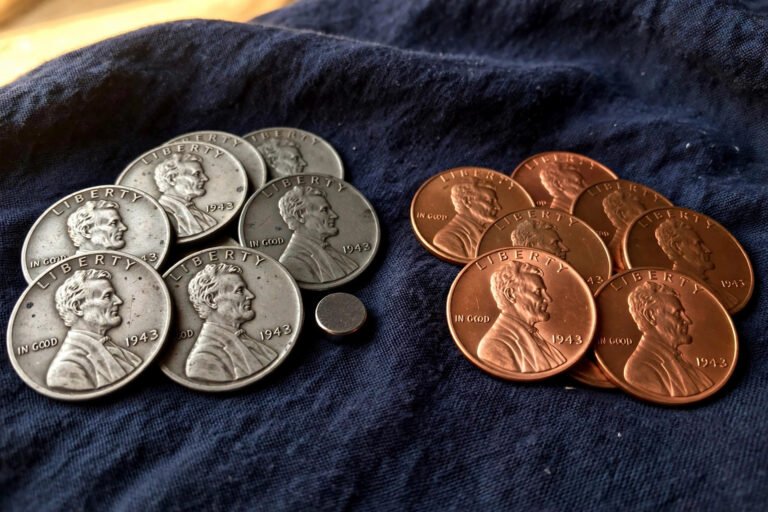
In 1943 the United States was deep in World War II, and copper was needed for shell casings and wiring. The Mint changed the cent for one year only: 1943 cents were struck from steel coated with a thin layer of zinc to slow down rust. They came out light grey, almost silver in colour, and at 2.7 grams they felt noticeably lighter than a normal penny. More than one billion were made across the three mints, which is why a genuine 1943 steel cent is common and worth only a few dollars.
The steel experiment was unpopular — the coins rusted, they were confused with dimes, and vending machines rejected them. So the Mint went back to bronze. Following a filing by the Acting Secretary of the Treasury on December 15, 1943, President Franklin D. Roosevelt signed the authorization to revert to bronze, and production of the new 95% copper alloy began on New Year’s Day, 1944.
The 1944 cents were struck in enormous numbers: Philadelphia alone made 1,435,400,000 — the first US cent ever to cross the one-billion mark at a single mint — with Denver adding 430,578,000 and San Francisco 282,760,000. Somewhere in that flood of bronze, a small number of steel planchets left over from 1943 were still sitting in bins and hoppers. They were fed into the presses and struck with 1944 dies. The result was a coin that should not exist: a grey, magnetic penny dated 1944.
The magnet test — step by step
You can run this test in under a minute with a fridge magnet and, ideally, a small coin scale.
- Check the date and colour. A genuine 1944 steel penny looks like a 1943 steel cent: light grey all over, including the edge, with a wheat reverse and the date 1944. A normal 1944 penny is copper-brown.
- Hold a magnet near it. A steel cent sticks firmly — it will jump to the magnet or cling to it. A bronze cent does not react at all. There is no in-between result.
- Weigh it. A steel cent weighs 2.7 grams. A bronze cent weighs 3.11 grams. A cheap coin scale settles most arguments on the spot.
- Look at the mint mark. Under the date, a “D” means Denver and an “S” means San Francisco; no mark means Philadelphia. All three mints produced steel errors, but San Francisco made only two known examples, so an “S” raises the stakes enormously.
Why it works: steel contains iron, which is magnetic. Bronze and copper are not magnetic at all. The magnet test is the same one that separates a normal 1943 steel cent from a rare 1943 bronze cent — only here the roles are reversed, because in 1944 steel is the mistake.
What to look for — checklist
- Date reads 1944, colour is grey, and the coin sticks to a magnet
- Weight is 2.7 grams, not 3.11 grams
- Grey metal all the way through, including the edge — not copper-coloured on the faces with grey showing at the rim (that is plating)
- Mint mark checked: no mark (Philadelphia, ~25–30 known), D (Denver, ~7 known), S (San Francisco, 2 confirmed)
- No signs of cleaning, polishing, or filing — steel cents rust and spot easily, and an original dull surface is worth far more than a shiny reprocessed one
- The coin has NOT been “tested” by scratching or filing an edge — that destroys value
Value table — what genuine 1944 steel pennies are worth
So few of these coins exist that prices swing widely from one sale to the next, and every figure below is an estimate. The table gives broad ranges drawn from recent auction results and published guide values; the exact price depends on the mint mark, the grade, and who is bidding that day.
| Coin | Circulated (low grade) | Uncirculated (MS) |
|---|---|---|
| 1944 steel cent, Philadelphia (no mint mark) | Around $25,000–$75,000 | Around $85,000–$180,000+ |
| 1944-D steel cent, Denver | Around $30,000–$75,000 | Around $100,000–$150,000+ |
| 1944-S steel cent, San Francisco (2 known) | Around $50,000 and up | $400,000 and up |
Real auction results behind those ranges:
| Coin | Grade | Price | Sale |
|---|---|---|---|
| 1944-S steel cent | MS66 | $408,000 | Heritage Auctions, August 2021 |
| 1944 steel cent, Philadelphia | MS64 | $180,000 | Heritage Auctions, June 2021 |
| 1944-D steel cent | MS63 (NGC) | $115,000 | August 2007 |
| 1944-S steel cent | XF40 | $49,200 | Stack’s Bowers, 2018 |
| 1944-S steel cent | XF45 | $373,750 | Heritage Auctions, 2008 |
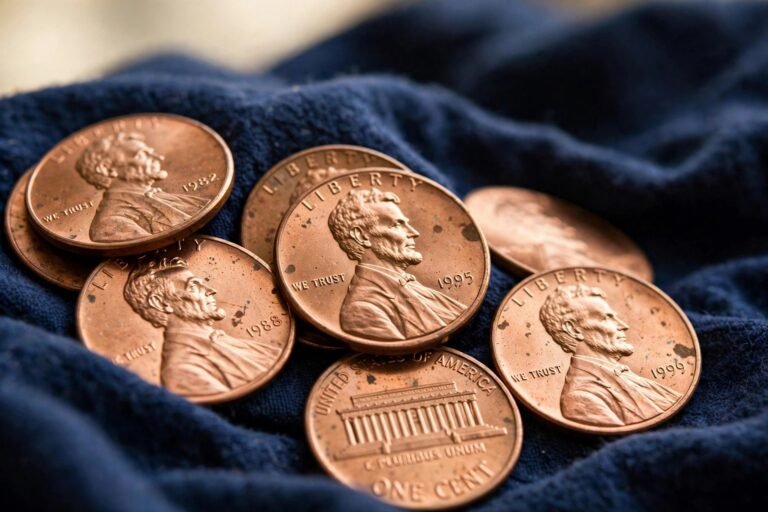
For comparison, a normal 1944 bronze penny in circulated condition is worth a few cents to about a dollar, and even a top-grade uncirculated example is typically worth only a few dollars to a few tens of dollars. The steel error is worth thousands of times more — which is exactly why it is faked so often.
One more 1944 variety worth knowing: the 1944-D/S overmintmark, where a die with an “S” mint mark was reused and stamped over with a “D”. It is a genuine and collectible variety, but a much more modest one — circulated examples typically sell for $50–$100, with mint state pieces reaching a few hundred dollars. Do not confuse it with the steel error; the two are entirely different coins.
Fakes, altered coins and cleaning warnings
This is the part that matters most, because the fakes outnumber the real coins by an enormous margin.
Altered dates. The most common fake starts life as a common 1943 steel cent. The date is altered — usually by reshaping the 3 into a 4 — and the coin is sometimes plated to look bronze. Compare the shape of the 4 on your coin with the 4 on a common 1944 bronze penny: on a genuine coin they match exactly.
Copper-plated steel cents. Plating a grey steel cent copper-coloured takes minutes, and plated coins turn up at flea markets, in online listings, and in “unsearched” rolls. The plating often breaks through at the rim or on high points, showing grey underneath. The magnet test defeats this one too: plated steel still sticks.
Steel-coloured plating on bronze. Less common, but the same rule applies: a plated bronze coin weighs 3.11 grams, not 2.7. Weight is the second test for a reason.
Outright counterfeits. With genuine examples worth five and six figures, struck copies exist. Some are good enough to pass a magnet and a scale. Only professional certification can catch these.
Cleaning. Never clean a suspect coin, polish it, or dip it to make it look brighter. Collectors pay far more for an original, dull-but-honest surface than for a shiny reprocessed one, and cleaning can cut a coin’s value by most of its worth. Our guide on never cleaning a coin explains why.
What to do if you find one
- Run the magnet test and weigh the coin. Write down both results, and photograph both sides clearly, next to the scale reading if you have one.
- Do not clean, polish, or scratch-test it. Never file an edge to “check the metal” — that destroys value.
- Handle it by the edges and store it in a coin flip, away from moisture — steel rusts.
- Check the mint mark and compare the date digits against a known genuine 1944 penny.
- If it passes the magnet test, weighs 2.7 grams, and is dated 1944, contact PCGS or NGC about certification before selling or announcing anything. No dealer or auction house will pay serious money for an uncertified coin, and with only a few dozen genuine examples known, certification is what separates a life-changing find from a clever fake.
- Keep it quiet until it is certified. A genuine 1944 steel penny is a major rarity; an uncertified claim attracts exactly the wrong kind of attention.
If your coin fails the magnet test, you almost certainly have a normal 1944 bronze penny — still a nice piece of wartime history, and worth keeping. Our wheat penny value guide covers the other dates worth hunting for, and our guide to the 1943 steel vs copper penny explains the mirror-image error from the year before.
FAQ
Is a 1944 steel penny rare?
Yes — extremely. Only about 30 to 40 are known across all three mints: roughly 25–30 from Philadelphia, about 7 from Denver, and just 2 confirmed from San Francisco. A normal 1944 bronze penny, by contrast, is one of the commonest wheat cents ever made, with over 2.1 billion struck across the three mints.
How can I tell a real 1944 steel penny from a fake?
Start with the magnet — a genuine steel cent sticks firmly — and the weight, 2.7 grams instead of 3.11. Then check the date digits against a known genuine 1944 penny, because altered dates are the commonest trick. After that, only PCGS or NGC certification can confirm it.
My 1944 penny sticks to a magnet but looks copper-coloured. What is it?
Almost certainly a steel cent that has been copper-plated after leaving the Mint, or a 1943 steel cent with an altered date. Steel is magnetic no matter what colour is put on its surface, so the magnet is telling you the truth — but the coin is not a genuine 1944 steel error unless the date, weight and mint mark all check out and it is certified.
What is a 1944 steel penny worth?
A genuine, certified example is worth tens of thousands of dollars at minimum, and far more in high grades. The auction record is $408,000 for a 1944-S graded MS66 (Heritage Auctions, August 2021), and a Philadelphia example graded MS64 sold for $180,000 in June 2021. Most grey 1944-dated coins offered to beginners are fakes, so certification comes first — before any talk of value.
Values are estimates based on grade, authenticity and current market demand at the time of writing. A cleaned, damaged or counterfeit coin is worth far less. Get valuable coins certified by PCGS or NGC.
One Comment