The Mint’s First Diamond Field Finish: 2026 Morgan and Peace Dollars Go on Sale November 12
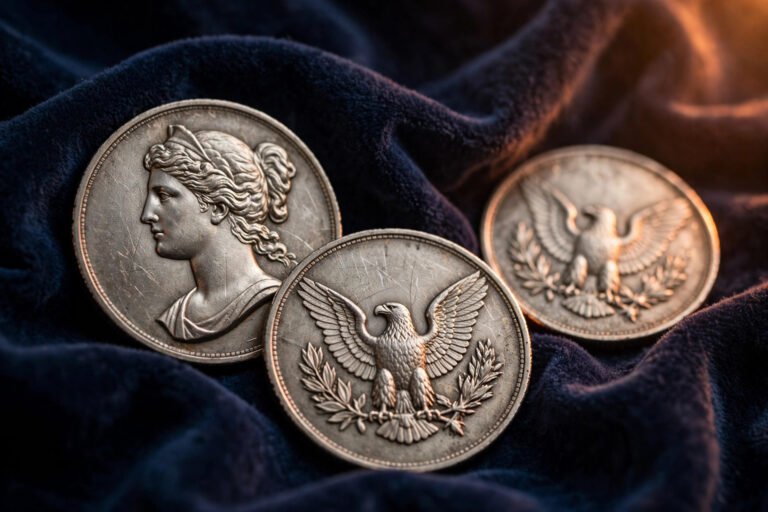
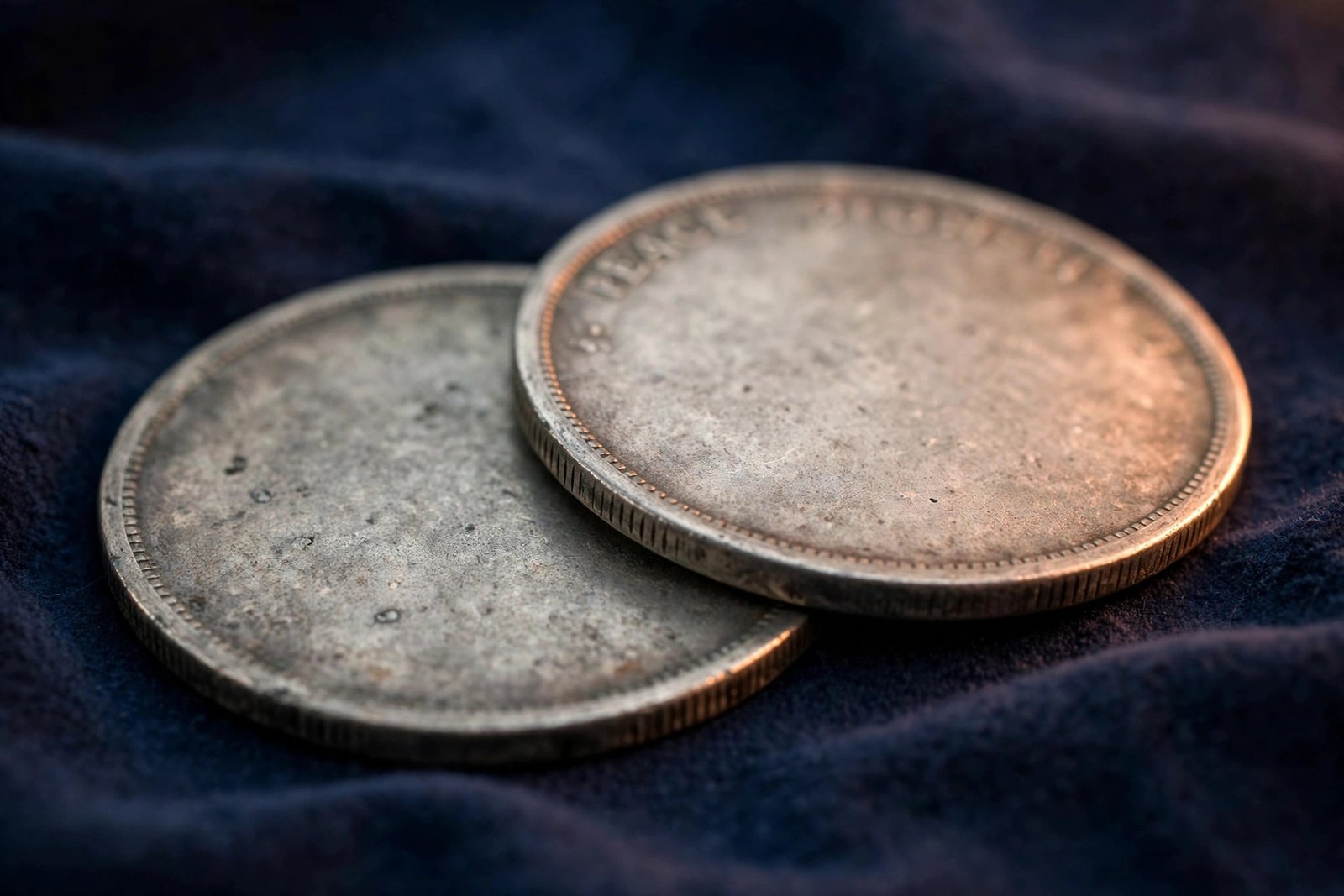
The United States Mint is giving its two most famous silver dollars a finish no American coin has ever carried before. The 2026 Morgan and Peace Dollar Diamond Field Two-Coin Set goes on sale Thursday, November 12, 2026, at noon Eastern Time — and the story behind it is more interesting than the price tag.
Search interest agrees something is happening. On Google Trends in the United States over the past seven days, “Morgan dollar” peaked at 94 out of 100 on November 6 at 2:00 PM, near its highest point of the week, and “Peace dollar” peaked at 35 on November 7 at 11:00 AM, also close to its weekly high. The driver is the Mint’s November 5 announcement of the new set, covered the same week by CoinWeek and other coin news outlets.
Here is what the set is, what it costs, what the silver inside is actually worth, and what a beginner should know before ordering day.
Quick answer: The Mint’s 2026 Morgan and Peace Dollar Diamond Field Two-Coin Set costs $375 and goes on sale November 12, 2026, at noon EST through the U.S. Mint (product code 26XS). It pairs one Morgan dollar and one Peace dollar, each struck in .999 fine silver with a brand-new laser-engraved diamond pattern in the fields — the first time the Mint has used this finish. The two coins hold 1.718 troy ounces of silver, worth about $89 at the November 6 spot price, so most of the $375 is collector premium, not metal. It is a collector product sold by the Mint, not a coin you will ever find in change.
What is the Diamond Field finish?
A coin’s “fields” are the flat background areas around the portrait, the lettering and the eagle. On a normal Proof coin, those fields are polished to a mirror shine while the raised design is frosted. Diamond Field does something different.
The Mint engraves the striking tools with a laser, cutting a repeating diamond pattern into them. When the coin is struck, that pattern transfers into the fields, so the background itself becomes a geometric texture that reflects light from several angles. The portraits and eagles stay familiar; the surface around them is what changes.
According to the United States Mint, no previous U.S. coin has carried this finish. The Mint developed the process specifically for America’s 250th anniversary — the semiquincentennial in 2026 — and says it debuts exclusively on this Morgan and Peace pair. The Mint also says the technique is more efficient to produce than some traditional finishes, though the announcement does not put a number on that.
For a beginner, the honest way to think about it is this: the finish is the product. The designs are more than a century old. What is new is the way the light moves across the background.
What comes in the $375 set
The set includes one 2026 Morgan dollar and one 2026 Peace dollar, a blue presentation box and a certificate of authenticity. Both coins share the same specifications:
| Detail | Both coins |
|---|---|
| Denomination | $1 |
| Composition | 99.9% silver (.999 fine) |
| Silver content | 0.859 troy ounce each |
| Diameter | 1.500 inches (38.10 mm) |
| Edge | Reeded |
| Mint and mint mark | Philadelphia, “P” |
| Date | Dual date “1776 ~ 2026” |
| Privy mark | Liberty Bell containing “250” |
The dual date and the Liberty Bell privy mark are the anniversary details: they mark the coins as one-year issues for 2026, the 250th year of the United States. The “P” mint mark tells you both coins were struck at Philadelphia.
The Mint lists a product limit of 262,500 sets and the same figure as a mintage limit. Those are announced ceilings, not final sales numbers — they tell you the most that can be made, not how many will sell. As of November 5, the Mint listed no household order limit, though it can add one, so check the live listing before ordering. The Mint also offers a “Remind Me” alert on the product page and a Morgan and Peace Dollar Two-Coin Set subscription under code NL.
What $375 actually buys: the metal vs. the premium
This is the part beginners most often misunderstand, so here is the arithmetic with a dated price.
Spot silver closed at $51.94 an ounce on Friday, November 6, 2026 (5:00 PM ET close). At that price:
| Item | Silver | Metal value at $51.94/oz |
|---|---|---|
| Diamond Field set (both coins) | 1.718 troy oz | About $89 |
| One classic Morgan or Peace dollar (90% silver) | 0.7734 troy oz | About $40 |
| The set’s premium over its metal | — | About $286 |
In other words, roughly $89 of the $375 is silver. The other roughly $286 pays for the new finish, the anniversary privy mark and dual date, the presentation box and certificate, the limited production run and the Mint’s markup. That is normal for a modern collector issue — but it means this set should never be judged as a way to buy silver. As a silver purchase, it is expensive. As a collectible, its value will depend on demand for the finish and the anniversary, not on the metal price. This blog does not give investment advice, and nobody can tell you today whether the set will hold its price on the secondary market.
For comparison, the classic circulating Morgan and Peace dollars are 90% silver coins weighing 26.73 grams, each holding 0.7734 troy ounce of pure silver. At the same November 6 price, one of those holds about $40 in metal — which is why our Morgan dollar value guide treats common circulated examples as melt-plus coins. The new set’s coins are a different product: .999 fine silver, heavier in pure metal per coin, and sold as collectibles.
Silver has been volatile all autumn — it fell below $50 an ounce on October 30 and climbed back above it on November 5 — so the metal figure in this post is a snapshot, not a fixed value. Our November 5 post on gold and silver climbing back above $4,000 and $50 explains how fast those numbers move.
Why Morgan and Peace belong together
The pairing is not random. The two designs tell the story of a single handover in 1921.
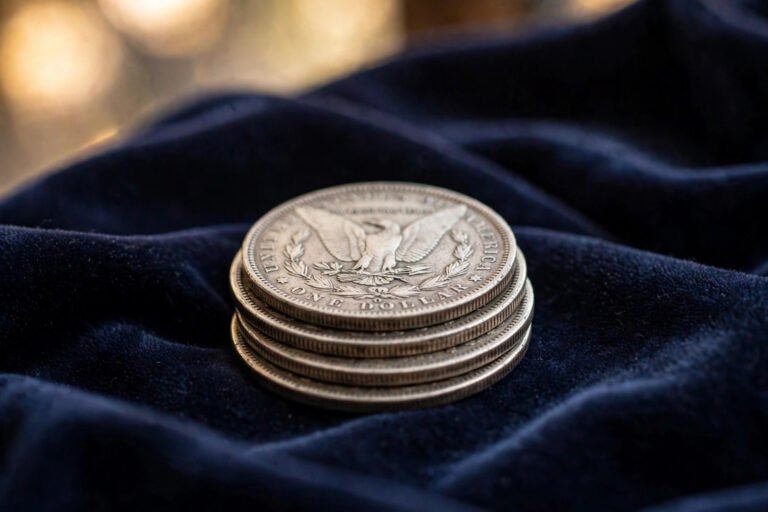
George T. Morgan’s dollar was first struck in 1878 and ran through 1904, then returned for one final year in 1921. Later that same year, the Mint switched to Anthony de Francisci’s Peace dollar, struck from December 1921 through 1928 and again in 1934–1935 — a total of 190,577,279 coins. The Morgan evokes westward expansion and industrial growth; the Peace dollar, with Liberty in a radiant crown and an eagle at rest above the word PEACE, marked America’s emergence from the First World War.
In 2021, the Mint revived both designs as .999 fine silver collector coins for the centennial of that 1921 transition, and collectors embraced the new programs. The Diamond Field set is the next chapter: the same two designs, a new finish, and a 250th-anniversary privy mark.
If you own classic examples of either series, the new set does not change what they are worth. A circulated 1921 Morgan is still the most common date in its series, and a common Peace dollar is still a melt-plus coin. The new release is a separate, modern collector product.
What to do if you want one
- Mark November 12, noon EST. Sales open on the U.S. Mint website under product code 26XS. Set the Mint’s “Remind Me” alert on the product page if you want a nudge.
- Order from the Mint first. The Mint is the source. If the set sells through there, reputable dealers are the next stop — not random online listings, and not before the release date. The set does not go on sale until November 12, so any “Diamond Field” coin offered before then is not the real thing.
- Check the live listing before you buy. The Mint can add a household order limit, and the product limit of 262,500 sets is a ceiling, not a promise that all will be made.
- Handle it like a collector coin, not pocket change. Hold it by the edges, keep it in its presentation box or a proper holder, and never clean it. Cleaning destroys collector value instantly and permanently — our guide to the mistakes that destroy coin value explains why.
- Keep the certificate and box. For modern Mint products, original packaging and paperwork are part of what the secondary market pays for.
- Do not rush. A new Mint release is not a deadline. Modern collector sets sometimes sell out and sometimes sit in stock for weeks; either way, paying a large markup to a reseller on release day is the most expensive way to own one.
Warnings: fakes, hype and the “investment” trap
No Diamond Field coin exists in circulation. These are collector coins struck at Philadelphia and sold by the Mint. If someone offers you one “found in change” or “from a bank roll,” it is not genuine.
Watch for copycat listings. A new finish with a distinctive look invites imitations. Genuine sets come from the Mint with the blue presentation box and certificate. On the secondary market, buy from established dealers and be wary of loose coins without provenance.
Do not treat the $375 as a silver investment. As the table above shows, about $89 of it is metal. The rest is a bet on collector demand for a new finish and an anniversary design. That demand may hold or fade, and this blog does not predict it.
The same rules apply to the classics. If the announcement sends you back to your own Morgan or Peace dollars, remember the basics: never clean them, handle them by the edges, and get anything genuinely valuable certified by PCGS or NGC before you claim a price for it.
FAQ
When does the Diamond Field set go on sale?
November 12, 2026, at noon Eastern Time, through the U.S. Mint under product code 26XS. The price is $375 for the two-coin set, with a blue presentation box and certificate of authenticity included.
How much silver is actually in the $375 set?
The two coins together hold 1.718 troy ounces of .999 fine silver — 0.859 ounce each. At the November 6, 2026 spot price of $51.94 an ounce, that metal is worth about $89. The remaining roughly $286 is the finish, the anniversary design, the packaging and the collector premium.
Will a Diamond Field coin ever show up in my change?
No. These are collector products sold by the Mint, not coins struck for commerce. No Diamond Field dollar will ever circulate, and any coin offered as one found in change is not genuine.
Is Diamond Field the same as a Proof finish?
No. A Proof coin combines mirrored fields with frosted raised designs. Diamond Field puts a laser-engraved repeating diamond texture into the fields themselves, so the background reflects light from several angles. According to the Mint, it is the first finish of its kind on a U.S. coin.
Values are estimates based on grade, authenticity and current market demand at the time of writing. A cleaned, damaged or counterfeit coin is worth far less. Get valuable coins certified by PCGS or NGC.